Relining is right when the pipe is still in one piece but cracked or letting roots in, especially when it runs under a driveway, a slab or a garden you want left alone. Digging up and replacing is right when a section has collapsed, because a liner needs a pipe to go inside, or when the damage is one short section the locator can pinpoint for a small dig. The camera footage decides which.
What is pipe relining?
Pipe relining puts a new pipe inside the old one. The crew gets in through existing inspection points, so there is no trench through the yard. The liner goes through the damaged run and cures in place, forming a new pipe wall that is sealed at every join and crack. Because the joins are sealed, roots cannot get back in.
The camera goes down before relining to show what is there, and again once the liner has cured, so you see the finished pipe on screen.
What does dig and replace involve?
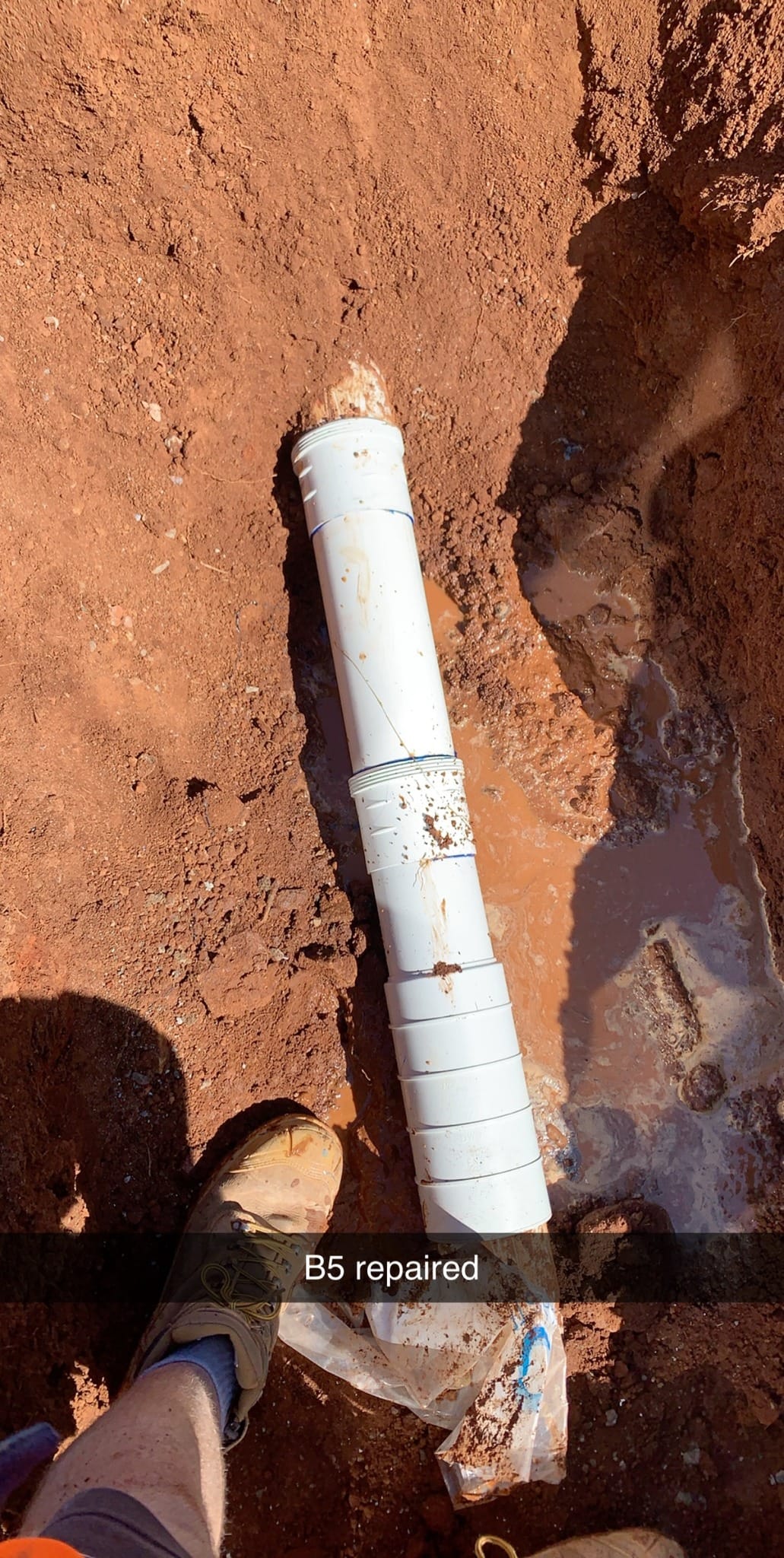
Dig and replace means opening the ground over the damaged pipe, cutting out the bad section and putting in new pipe. The way Blockage Bros does it, the locator first pinpoints the fault and its depth from the surface, so the dig is one small hole at the right spot, not a trench across the yard. The new section goes in, and the drain is tested so we know it holds. More on that on the drain repairs and replacements page.
Replacing the whole run is also an option, and it is the answer when the line is too far gone to reline.
When is relining the better choice?
- The pipe has cracks or open joins along its length, and roots keep getting in at more than one spot.
- The drain runs under a concrete driveway, a house slab, paving, a deck or an established garden.
- The pipe is still holding its shape on camera, even if it is cracked.
- You want the roots stopped at the joins, not cut back and left to regrow.
Older clay sewer lines, common in suburbs like Footscray, Brunswick and Preston, often show this pattern: many joins along the run, several of them cracked, with big trees nearby. Fixing one join by digging leaves the rest to fail later. Relining the run seals all of them in one go.
When is digging up the drain the better choice?
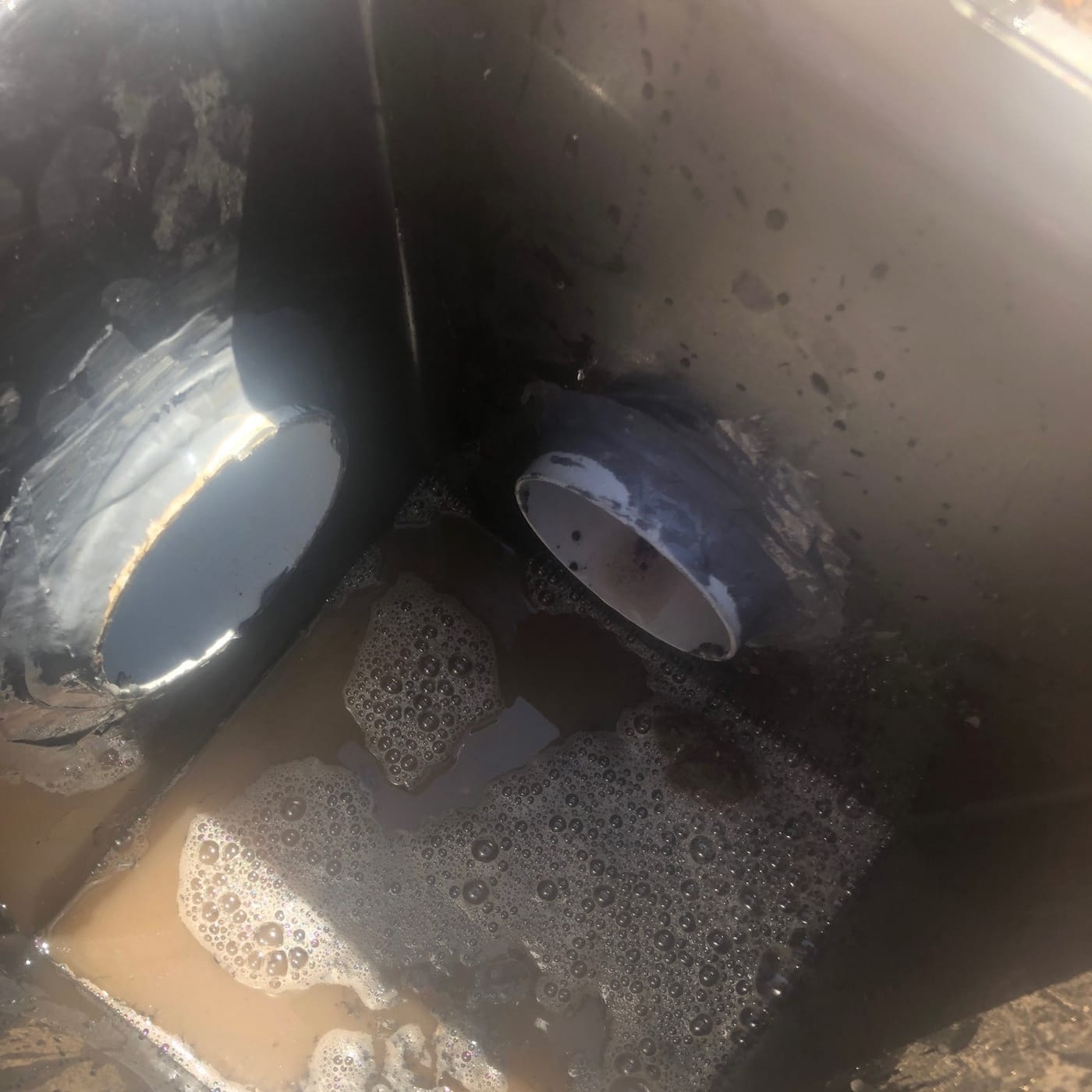
- A section has collapsed or been crushed. A collapsed line cannot be relined, because there is no pipe left to line. If that is what the camera shows, we say so and price the repair instead.
- The damage is one short section, for example a single cracked join, in a spot that is easy to dig.
- The pipe sits under open lawn or a garden bed, where one small dig causes little disruption.
How does the camera decide?
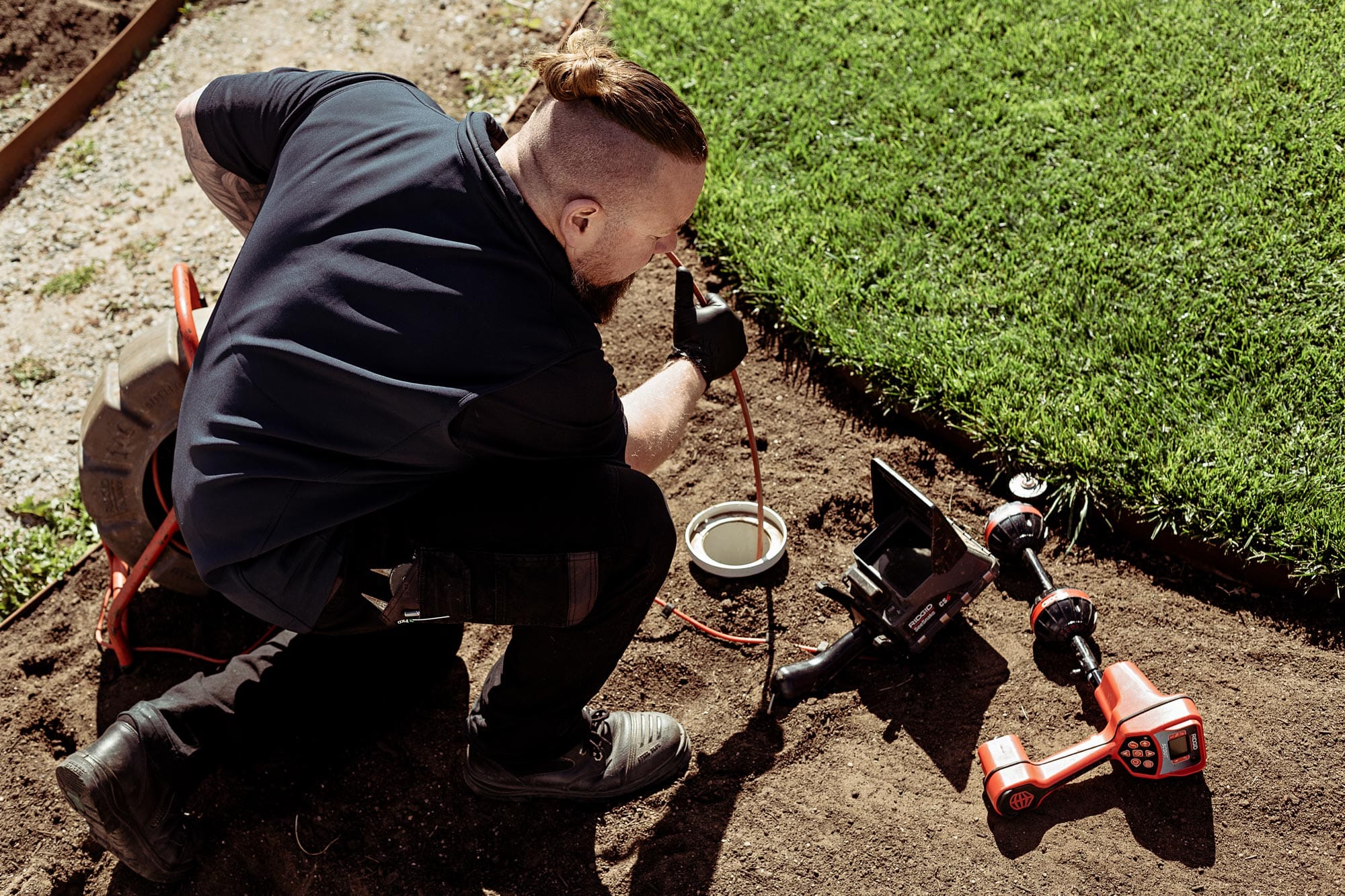
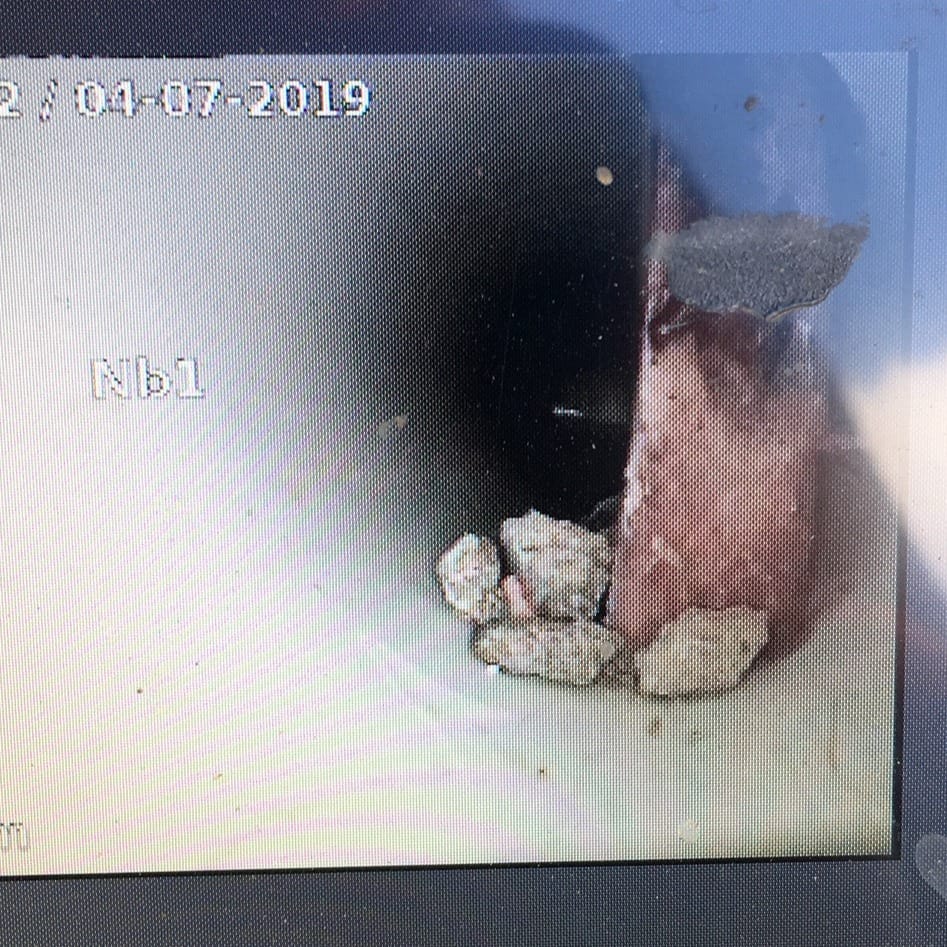
Every job starts with a CCTV drain camera down the line, and you see the footage on screen on the day. That footage answers the questions the choice depends on:
- Is the pipe still in one piece, or has a section collapsed?
- Is it one bad spot or damage all along the run?
- What is causing it: roots, a crack or a collapse?
- Where exactly is the fault, and how deep?
The locator then marks the fault and its depth from the surface. With that in hand, you get three priced options in writing before any work starts:
- Option 1, the quick fix: clear it with jetting or root cutting. It costs the least today, but a damaged pipe will block again.
- Option 2, the proper repair: dig and replace the damaged section at the spot the locator found.
- Option 3, the permanent solution: reline or replace the whole run.
The written quote refers to the footage, and you choose. There is more on the camera side on the CCTV drain camera inspections page, and on finding the fault from the surface on drain locating.
What happens to my lawn, driveway or slab?
This is often what tips the decision.
- Lawns and gardens. A small, located dig in open lawn is usually simple to put back. A trench along a whole run through an established garden is a different story, and relining avoids it.
- Driveways and paving. Cutting and relaying concrete or pavers adds work and disruption. Relining goes in from the inspection points and leaves the surface alone.
- Slabs. Drains under a house slab are the hardest to dig. Relining is usually the way to fix them without breaking into the slab, as long as the pipe has not collapsed.
Reactive clay soils across Melbourne's western plains move pipes as they shrink and swell, so it is common for a run to have damage in more than one place. When the camera shows that, and the damage sits under hard surfaces, relining usually makes more sense than several digs.
How do you know the fix has worked?
A repaired section is tested so we know it holds. A relined pipe gets the camera again once the liner has cured, so you see the new pipe wall on screen, sealed at the joins. If you need proof that a drain or a section of it does not leak, static and isolation testing pressure or water tests it to prove if it leaks and where.
Does one always cost less than the other?
No. It depends on where the damage is, how much of the run is affected, how deep it sits and what is on top of it. That is why the three options are priced after the camera and the locator have done their work, not before.
Not sure which your drain needs? Contact Blockage Bros and the camera will show it. Someone is on call 24/7 across Melbourne's west and north-west, Geelong, Ballarat and Kyneton.